How to Actually Get AI Working in Your Operations
A practical guide for facility managers, service operators, and anyone running real-world teams
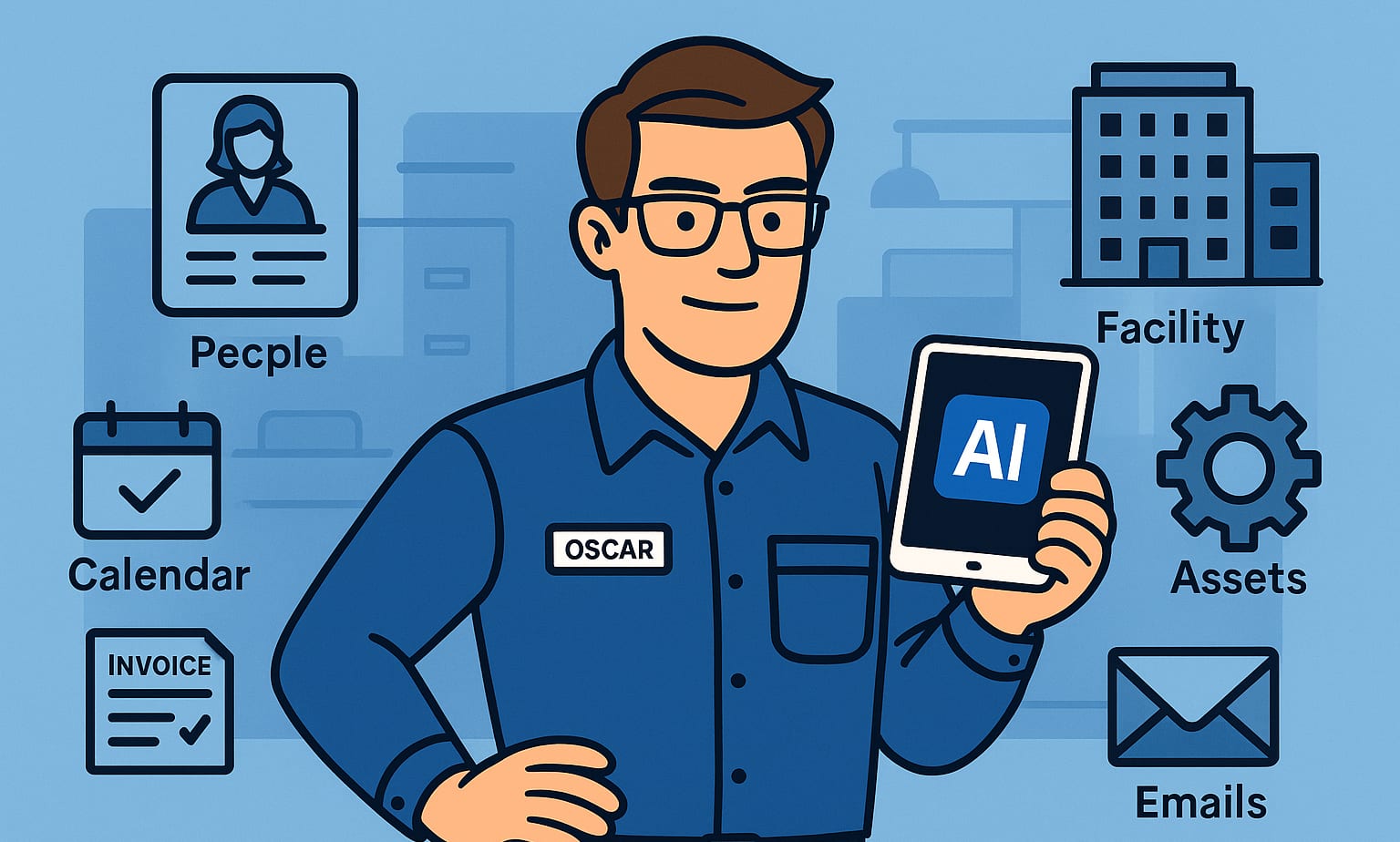
Most operators I talk to want AI in their business. The hesitation isn't about whether it's useful, it's about where it actually fits. If you're running facility services, commercial cleaning, maintenance crews, schools, or health services, your reality looks nothing like a tech startup demo. You're managing people, sites, assets, compliance schedules, invoices, quotes, and a stream of emails that never stops.
So the real question isn't "How do I use AI?"
It's "How do I slot AI into my existing chaos so it actually helps without creating more work?"
This guide gives you a practical framework for doing exactly that.
The Foundation: AI Amplifies What You Already Have
Here's an uncomfortable truth: AI won't fix broken operations. It will amplify them.
If your workflows are scattered across fourteen spreadsheets, your job data lives in someone's head, and your documentation is inconsistent at best, AI won't know where to look. You'd essentially be handing a very sophisticated tool a shoebox of random receipts and asking it to predict your future.
AI becomes powerful when your operations have clear job structures, reliable task flows, consistent documentation, and centralised data. This doesn't mean you need perfection. It means you need your operational information living in one place where AI can actually access and make sense of it.
This is why the first step for most businesses isn't implementing AI, it's consolidating operations into a unified platform. Once everything lives in one system, AI has something meaningful to work with.
Five Places AI Actually Delivers Value in Operations
Forget the abstract promises. Here's where AI creates tangible time savings and better outcomes in operational businesses right now.
1. Automated Email Processing
Most service businesses run half their operation out of their inbox. Client requests, job updates, supplier quotes, and complaint escalations all arrive as unstructured text that someone has to read, interpret, and act on. This is grunt work that scales linearly with your volume—and it's exactly what AI handles well.
AI email parsing can extract job details from incoming messages, classify work types automatically, assign teams based on content, convert emails into structured job records, summarise long threads into actionable briefs, and flag when critical information is missing. This is often the fastest win for operations teams. Platforms like Eaco offer email parsing as a turnkey feature—no custom development required.
2. Field Notes and Documentation Cleanup
Your field team writes notes the way humans do: fast, messy, and context-dependent. That's fine for getting information captured in the moment. It's terrible for compliance audits, client reporting, or anyone else who needs to understand what happened three months later.
AI can rewrite field notes into clean, structured, tagged documentation that's audit-ready without losing the original meaning. The transformation is especially valuable when those notes feed into consolidated job records—suddenly your documentation becomes a searchable, analysable asset rather than a liability.
3. Pattern Recognition and Early Warning
Once your workflows sit in a unified system, AI can start identifying patterns you'd never spot manually: jobs consistently running overdue on specific sites, contractors with reliability issues, cost overruns following particular patterns, safety compliance gaps, or assets showing early signs of deterioration.
The value here isn't prediction for its own sake—it's catching problems before your client calls to complain. This shifts you from reactive firefighting to proactive management, which changes both your stress levels and your client relationships.
4. Operational Question-Answering
This is where operators tend to get excited. Imagine being able to ask natural language questions about your operation: "Which sites have outstanding compliance items?" "What's our average response time for emergency callouts this quarter?" "When was the last service on the HVAC at Building 7?"
An AI assistant connected to your operational data can answer these questions instantly, with full context from your sites, assets, schedules, job history, and compliance records. Instead of digging through reports or asking three different people, you get answers in seconds. This capability is emerging in platforms designed for operational workflows—Eaco's AI assistant is one example of this approach.
5. Automated Client Reporting
Quarterly reports, safety summaries, ESG documentation, asset status updates—these are time-consuming to produce but essential for client retention and compliance. AI can generate these reports automatically by pulling from job logs, proof of work, attendance records, audit trails, and compliance data your team is already capturing.
The shift from manually compiling reports to reviewing AI-generated drafts saves hours per client per period. More importantly, it means reports actually get done consistently rather than being deprioritised when things get busy.
What AI Actually Replaces
Let's be clear about what AI does and doesn't do in operations. AI doesn't replace people. Your team's judgment, relationships, problem-solving, and physical presence are irreplaceable.
What AI replaces is the administrative friction that prevents good people from doing good work: repetitive data entry, duplicated effort across systems, manual report generation, inbox management, information hunting, and chasing status updates. When you combine capable people with streamlined workflows and AI handling the drudgery, you get a team that operates at a level your competitors can't match without significantly more headcount.
A Practical Implementation Path
Getting AI into your operations doesn't require a massive transformation project. Here's a realistic sequence that works for most operational businesses.
Step 1: Consolidate Your Operational Data
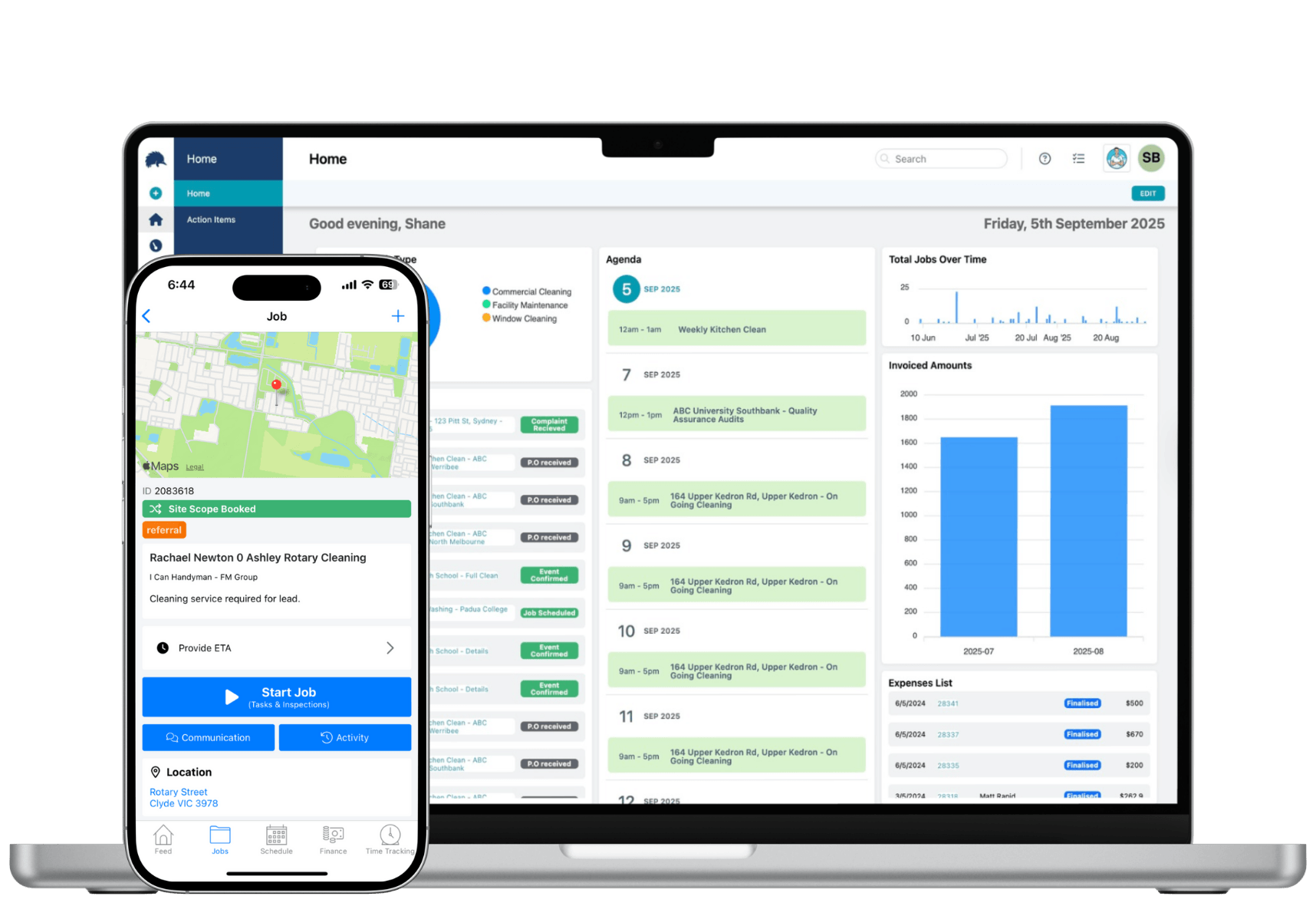
Jobs, sites, assets, schedules, compliance records, and time tracking need to live in one system. This isn't about AI yet—it's about creating the foundation that makes AI possible. Without centralised data, you're trying to build on sand. All-in-one operational platforms exist specifically for this purpose.
Step 2: Start With High-Volume, Low-Risk AI Features
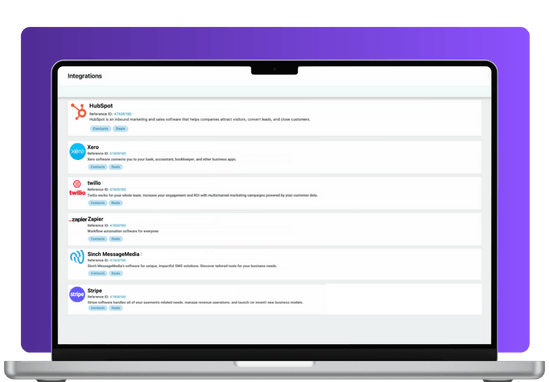
Email parsing and note cleanup are ideal starting points. They handle high-volume, repetitive tasks where errors are easily caught and corrected. You get immediate time savings while building confidence in AI-assisted workflows. Most modern operational platforms include these as built-in features—no separate AI projects required.
Step 3: Expand to Reporting and Analysis
Once your data is clean and flowing through a unified system, automated reporting becomes straightforward. Start with one client or one report type. Refine the outputs until they meet your standards, then roll out more broadly.

Step 4: Add Intelligence Layers
With a solid operational foundation, you can layer in more sophisticated capabilities: predictive maintenance, pattern-based alerts, and AI-powered decision support. These features are increasingly available as native capabilities in operational platforms rather than requiring custom AI development.

The Competitive Reality
By the end of 2026, the businesses winning in operational industries won't necessarily be the biggest. They'll be the ones that move faster, respond quicker, report cleaner, prove compliance instantly, and solve problems before they escalate.
The common thread? Their operations run on systems built to leverage AI—not as an afterthought, but as a core capability.
The technology is ready. The question is whether you'll implement it thoughtfully while it's still an advantage, or scramble to catch up once it's table stakes.
Ready to Build the Foundation?
Everything in this guide comes back to one prerequisite: your operational data needs to live in one place before AI can do anything useful with it.
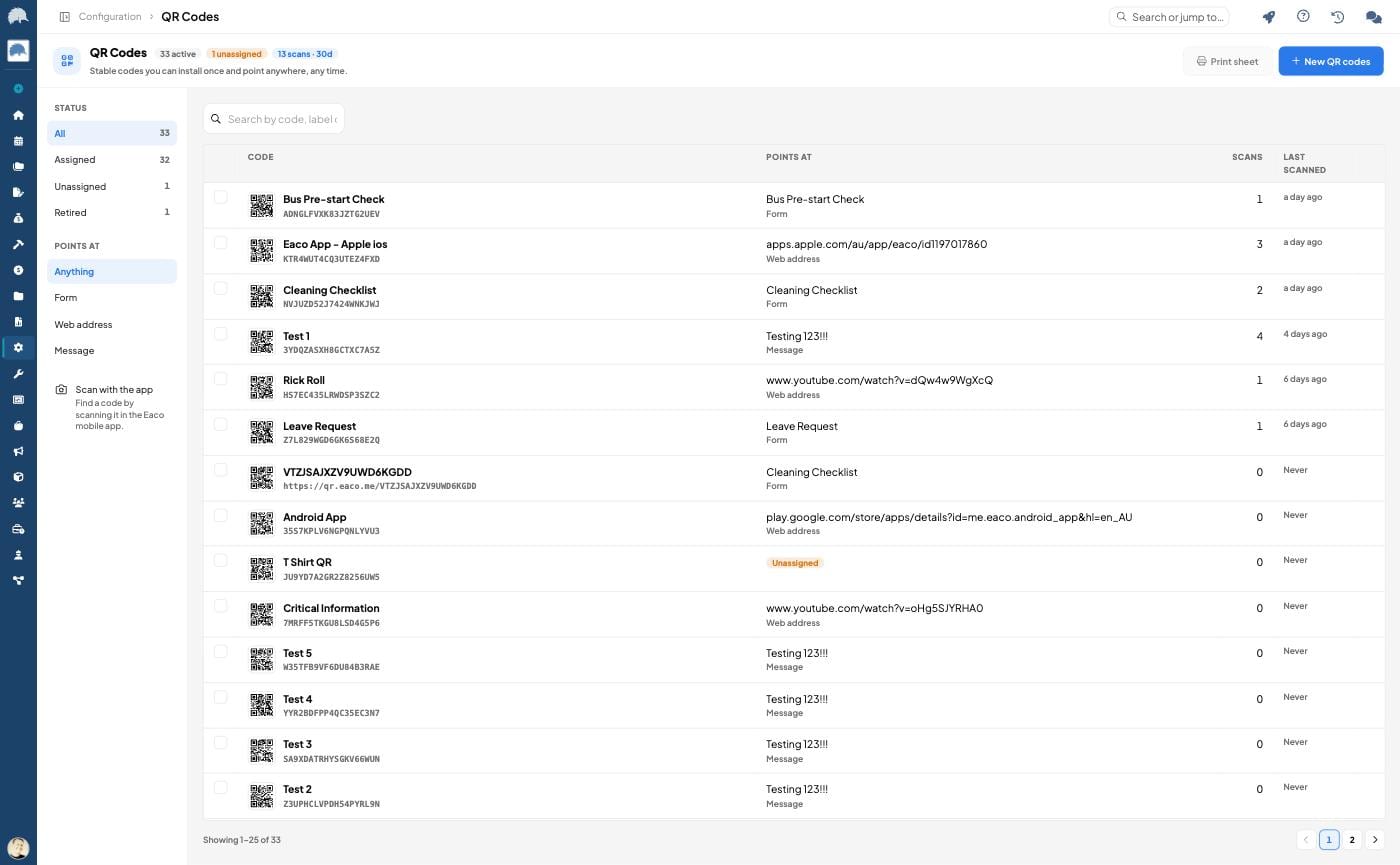
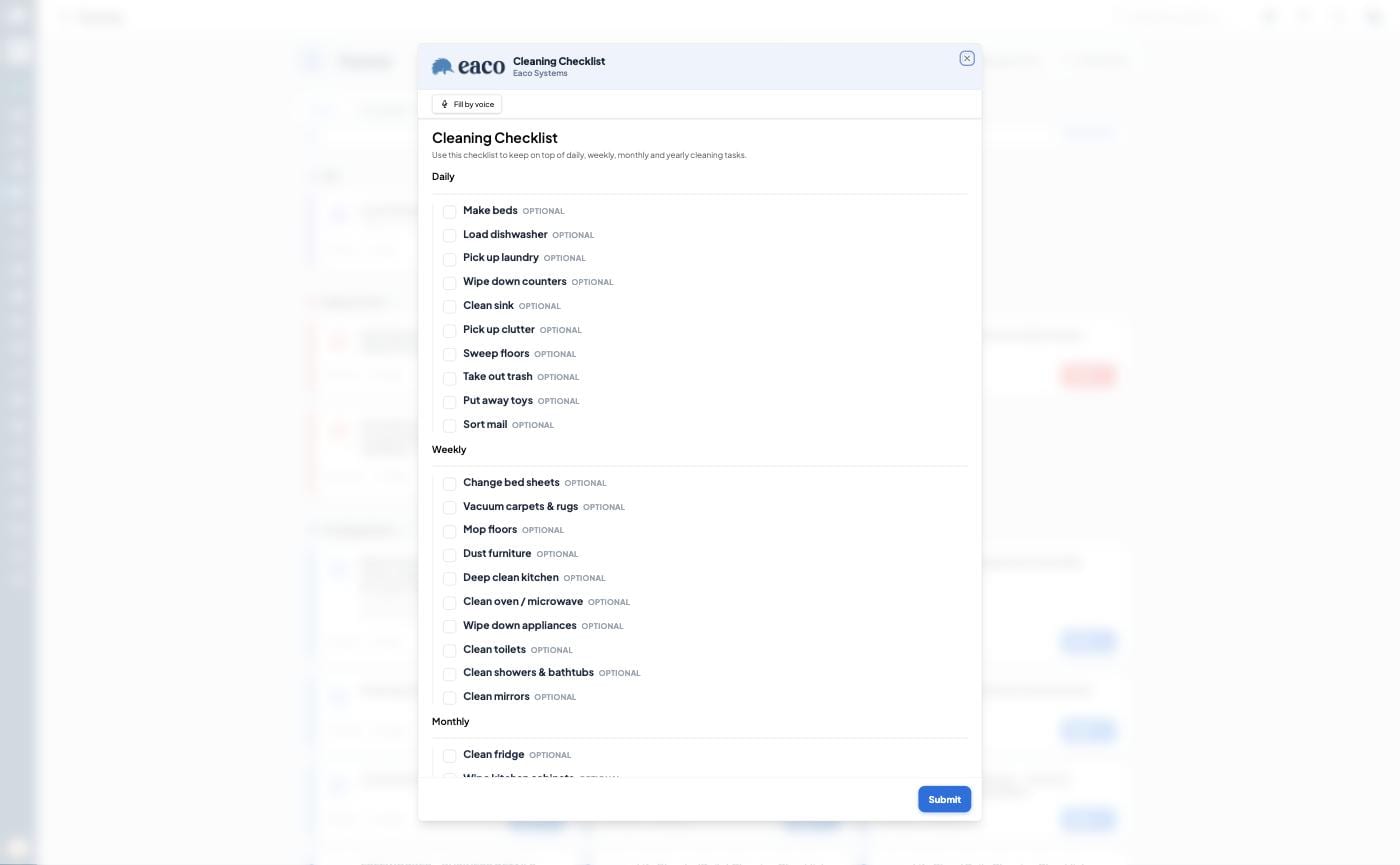
Eaco was built for exactly this. It's the platform that connects your jobs, people, sites, assets, compliance, and contractors in a single system—so when you're ready to layer in AI capabilities like email parsing, automated reporting, and predictive operations, you're not starting from scratch.
Over 30,000 properties and 2 million work orders already run through Eaco. The teams using it aren't just more organised—they're positioned to capture every AI advantage that comes next.
See what unified operations actually looks like.
Start a free trial or book a 15-minute demo with the Eaco team. No consultants, no six-month implementatio, just a platform that works.